




halt and hass testing | In the world of electronics development and production, product reliability and durability are essential. HALT and HASS tests, short for Highly Accelerated Life Testing and Highly Accelerated Stress Screening, are indispensable tools here. These test methods help to identify the limits of a product and eliminate potential weaknesses at an early stage. In this article, we take a closer look at the functionality, areas of application and advantages of these two methods.
What are HALT tests?
HALT tests aim to specifically test the system limits of a product – up to and including destruction. This not only checks the maximum load capacity of the electronic components, but also identifies potential weak points. Extreme test conditions such as strong vibrations and temperature changes can be used to “push the product to its limits”.
What is HALT used for?
HALT is primarily used in the development phase. The aim here is to
Carrying out technology comparisons: For example, which material pairings or designs are more durable.
Detect design errors at an early stage: Potential weaknesses can be identified as early as the initial sample phases.
Making comparisons between components: Especially for sensitive components such as capacitors or heavy components that could easily break off.
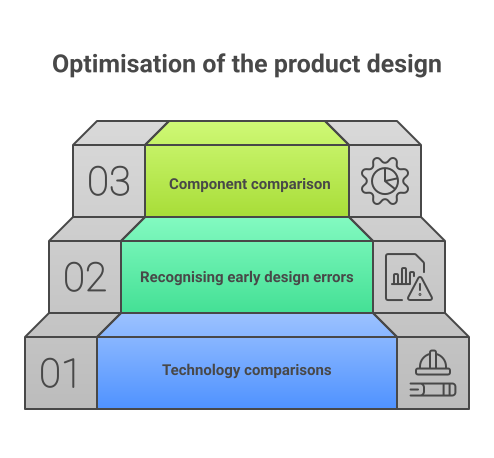
HALT tests are therefore an effective means of gaining early insights that are crucial for subsequent series production.
How do HALT tests work?
For HALT tests, test specimens are exposed to extreme conditions that would often not occur in practice. Typical types of load are :
- Vibrations: A 6-axis vibration table, which generates forces of up to 50g, simulates mechanical stress.
- Thermal shocks: Sudden, extreme temperature changes put the circuit board under high thermal stress.
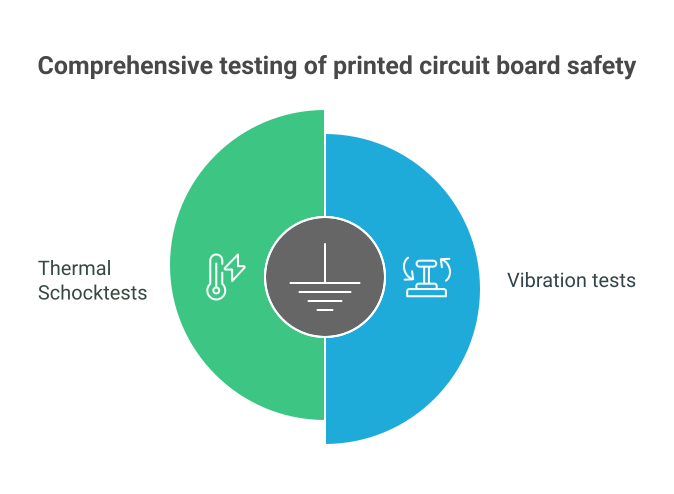
The combination of these stresses means that weak points become visible more quickly. Mechanical faults such as solder joint fractures or the tearing off of components often occur after just a few hours. Thermal weaknesses usually become apparent after around 1,000 cycles, which corresponds to a test period of 12 to 24 hours.
Advantages of HALT tests
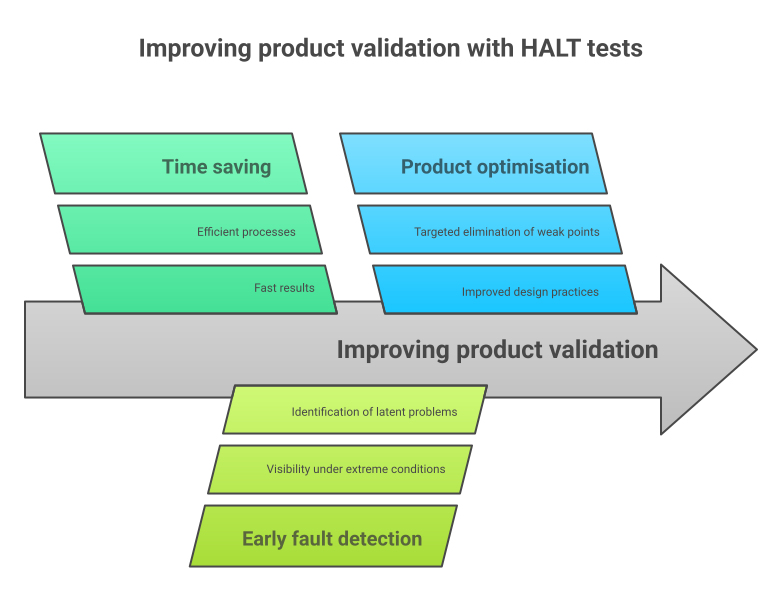
HALT offers the following main advantages:
- Time saving: Compared to classic validations, which often take months, HALT tests deliver results within a few days.
- Early detection of faults: The extreme conditions make problems visible that would normally only occur after a long period of use.
- Product optimization: Weak points can be specifically eliminated and the product design improved.
What are HASS tests?
HASS tests take a different approach. While HALT deliberately exceeds the limits of a product, HASS tests remain within the specified tolerances. The aim is to identify production errors and ensure the consistency of series production.
Areas of application of HASS
HASS tests are primarily used in the production phase. Typical scenarios are :
- Quality assurance: every 100th or 1,000th product is tested to ensure that it meets the specified requirements.
- Change validation: In the event of component changes or production relocations, it is checked whether the product still meets the standards.
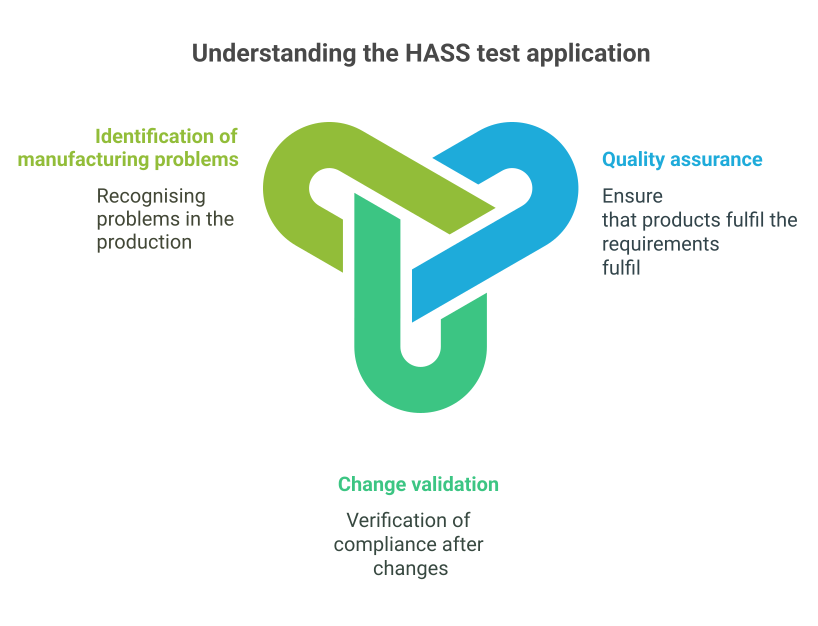
Regular HASS tests allow weak points in the production line to be quickly identified and rectified before they affect product quality.
HALT vs. HASS: The differences
Feature | HALT | HASS |
Goal | Recognition of weak points and limits | Ensuring production quality |
Application phase | Development phase | Series production |
Procedure | Inspection up to destruction | Tests within specified limits |
Typical loads | Extreme temperatures and vibrations | Specification-compliant tests |
How quickly do these tests provide results?
The test duration depends on the type of load:
- Thermal loads: First failures show up after about 1,000 cycles, which corresponds to 12 to 24 hours of testing.
- Mechanical loads: Breakages or failures often occur after 2 to 3 hours.
Compared to validations, which often take several months, HALT and HASS tests therefore offer significant time savings.
Conclusion: Why HALT and HASS are indispensable
At a time when product reliability is critical, HALT and HASS tests offer valuable insights. While HALT reveals the limits of a design and offers opportunities for optimization, HASS ensures that this quality is maintained in series production. Both methods complement each other perfectly and help to develop and produce high-quality and durable products.
If you would like to find out more about hass halt tests or need support with their implementation, please contact us – we will be happy to help you!
halt and hass testing
Your questions, our answers about HALT & HASS
What is a HALT HASS test and how is it performed?
A HALT/HASS test is a highly accelerated reliability method in which electronic assemblies are exposed to extreme temperature and vibration stresses. HALT is used to identify design weaknesses during development, while HASS screens for manufacturing defects in series production.
enveon performs HALT and HASS testing in specialized stress chambers that combine temperature cycling, vibration and continuous functional monitoring to reveal failure mechanisms at an early stage.
What are the advantages of a HALT HASS test compared to traditional product testing?
HALT/HASS testing offers advantages over traditional product tests by revealing weaknesses and failure mechanisms much earlier. Highly accelerated temperature and vibration stresses expose design limits, defects and manufacturing variations faster than conventional environmental testing.
enveon uses HALT/HASS to identify development risks early and to improve the reliability of electronic products more effectively.
How long does a HALT HASS test take on average?
The duration of a HALT/HASS test depends on the defined stress profile, the number of steps and the required functional monitoring. Typical HALT tests range from several hours to multiple test days, while HASS screenings vary depending on production volume.
enveon sets test duration on a project-specific basis and coordinates stress levels, timing and monitoring intervals individually with you.